Decorative lighting has a peculiar status in most homes. Nobody would run a permanent extension lead to their air conditioner, yet a string of lights fed by exactly that arrangement will happily stay up for years.
The lights themselves are usually low power and low risk. Everything that goes wrong is in how they are supplied, fixed and protected — and all three are straightforward to get right.
Start with the supply, not the lights
Decide where the power is coming from before you plan the layout. This sounds backwards and it is not: the supply determines what is possible, and retrofitting a proper point after the run is up means taking it down again.
A decorative run — especially an outdoor one — should be fed from a point protected by an RCCB, with the adaptor or driver kept dry, and with the cable routed where it will not be trodden on, pinched in a door or left lying in water.
The arrangement to avoid
An extension lead run out through a window to a balcony, its board sitting on the floor where water collects, fed from a socket with no earth leakage protection. It is the single most common decorative lighting setup we are called to fix.
Match the rating to the position
Indoor sets belong indoors. Covered balconies count as outdoors in a humid coastal climate — Surat's air will find any joint that is not sealed, and monsoon spray reaches much further under a cover than people expect.
- Indoors, dry: standard indoor sets are fine
- Covered balcony or verandah: outdoor-rated sets with sealed connectors
- Open terrace, garden, facade: outdoor-rated throughout, glands on cable entries
- Anywhere near a water feature or planting that gets watered: treat as fully exposed
Low-voltage sets running from a plug-in driver are a good option outdoors, provided the driver itself lives somewhere dry. The cable beyond the driver is then at a much safer voltage.
Fixings that hold and do not damage
The temptation is to use whatever is at hand — a nail, a staple, a loop of wire. Nails and staples through cable are a genuinely bad idea: even if they miss the conductor today, the pressure damages insulation and the fault develops later.
Use fixings designed for cable: clips that grip the sheath without compressing it, hooks for swagged runs, and adhesive mounts on tile or glass where you cannot drill. Match the fixing to the surface rather than forcing one type everywhere.
- Cable clips that hold the sheath without pinching it
- Hooks or eyes for swagged runs, spaced evenly
- Adhesive mounts for tile, glass and finished surfaces
- Cable ties on railings and pergolas — snug, not tight enough to deform the cable
- Never nails or staples driven through or across the cable
Layout: what makes it look deliberate
The difference between decorative lighting that looks designed and lighting that looks draped comes down to two things: consistent spacing and following an existing line.
Run cable along something the eye already reads as a line — a railing, a beam, a parapet edge, the top of a wall. Keep swag depth even along a run rather than letting it vary. Coil and secure the spare cable at the supply end rather than leaving it hanging. Small things, and collectively they are most of the effect.
Cove and permanent installations
Permanent decorative lighting — LED strip in a cove, profile lighting under a counter, a lit niche — has one requirement people consistently overlook: the driver will fail before the LEDs do, and it needs to be reachable when it does.
Plan for that at installation. Leave an access panel, or place the driver in an accessible ceiling void or cupboard. Retrieving a driver that was plastered into a cove means cutting the ceiling open, which is an expensive way to replace an inexpensive part.
Strip also needs heat to escape. Run inside a sealed channel with no ventilation, it will run hot and its life will be a fraction of what the packaging claims. An aluminium profile is not decoration — it is a heatsink.
Control and habits
Put decorative lighting on a switch you will actually use, or a timer. Lighting that is awkward to switch off tends to stay on, and decorative runs are exactly the kind of thing you do not want energised unattended for weeks at a stretch.
A simple plug-in timer or a smart plug on a protected point handles it. Set it to come on at dusk and off at bedtime, and the whole question goes away.
Safety first
If a decorative run trips the board, take it down and inspect it rather than resetting and leaving it up. Something in that run has a fault, and it is usually somewhere exposed to the weather.
Related service
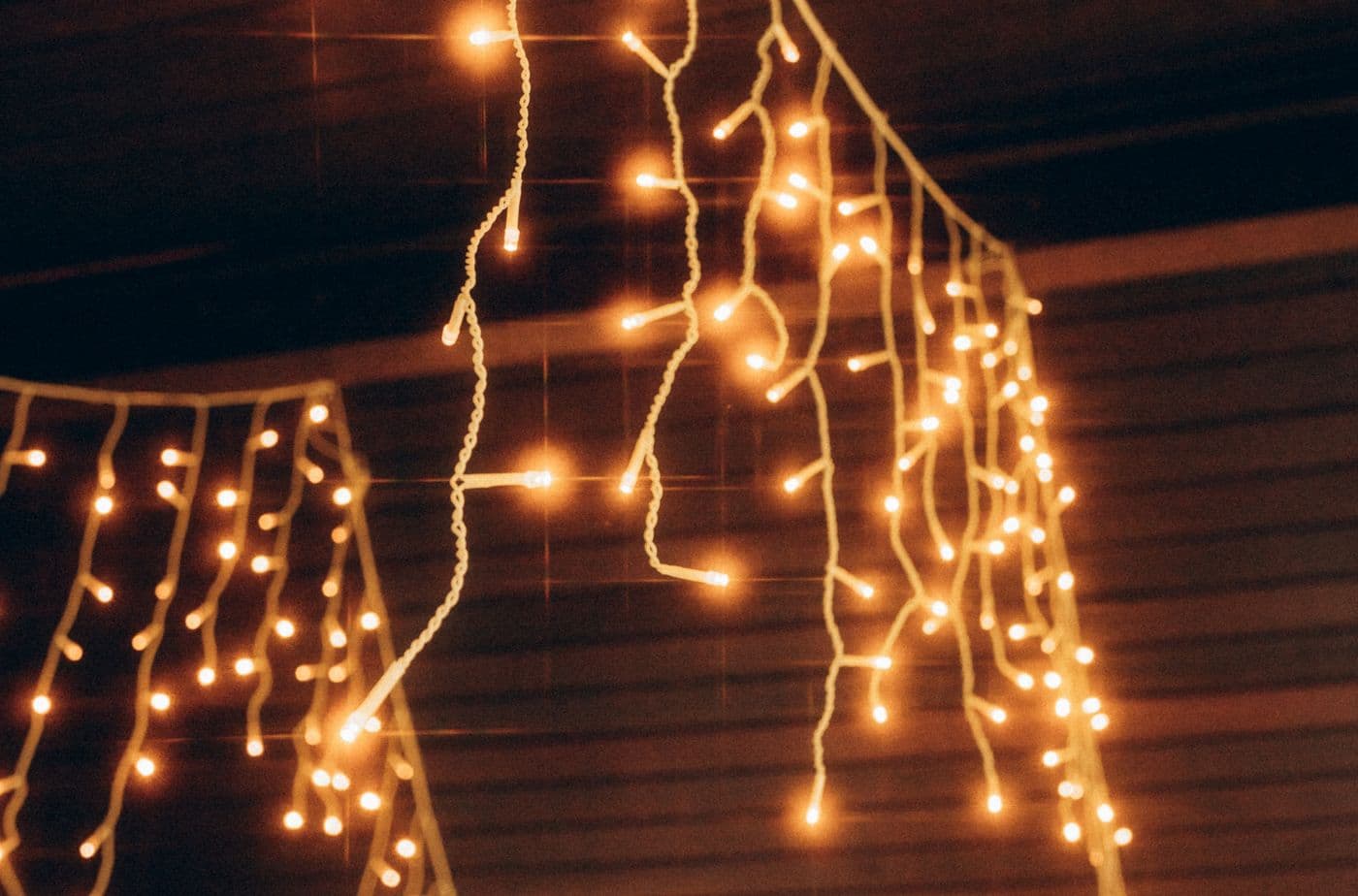
Fairy Light Installation
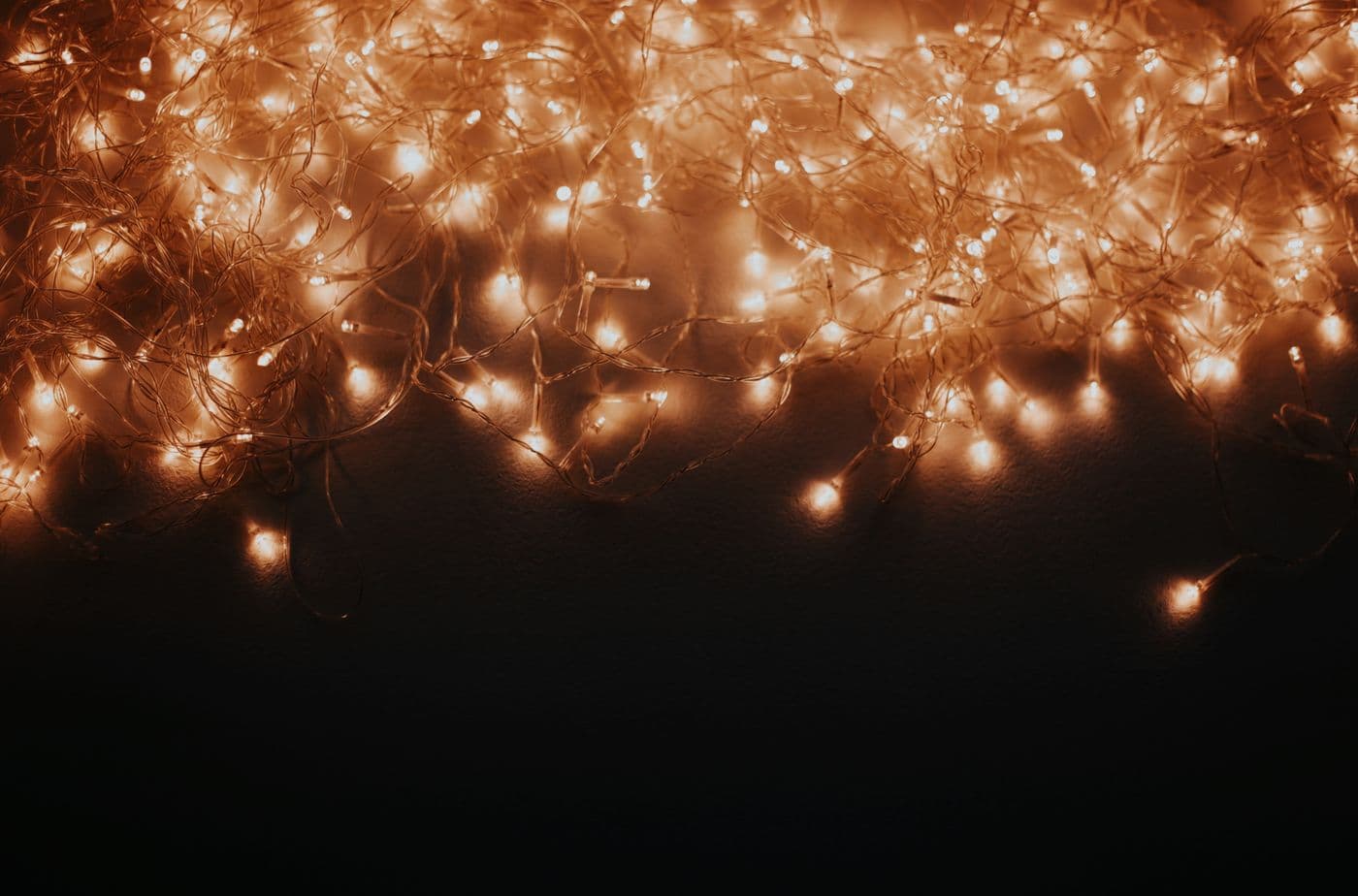
Decorative and string lighting installed properly — protected supply, correct fixings, neat layout.
Quick answers
Can I use cable ties to fix string lights to a railing?
Yes, provided they are snug rather than tight. A tie pulled hard enough to deform the cable damages the insulation, which is exactly the failure you are trying to avoid.
Why does my LED strip in the cove fail so quickly?
Usually heat, sometimes the driver. Strip run in a sealed channel with no way for heat to escape runs far hotter than intended. An aluminium profile is a heatsink, not a decorative choice.